


Why Waiting to Sell Your Home Is Costing You Thousands
- Mar 16
- 6 min read

Key Takeaways
Monthly holding costs quietly drain equity
Market shifts can lower your final sale price
Repairs get more expensive over time
The Truth About “Waiting for the Right Time”

Be honest with yourself for a second.
Have you been thinking about selling your house… but not quite ready?
Maybe you’re waiting for the market to improve. Maybe you’re hoping interest rates drop. Maybe you’re just overwhelmed and putting it off.
That’s completely normal. But here’s what most homeowners don’t realize:
Waiting often costs more than selling, and not just a little.
In many cases, homeowners lose thousands, sometimes tens of thousands, of dollars simply by waiting six months to a year.
As cash home buyers, we see this happen every single day. Sellers call us after they’ve waited, hoping they would “get more later,” only to discover they would have walked away with more money if they had acted sooner.
Let’s break down exactly where the money goes, and how to know if waiting is costing you.
The Silent Money Leak: Monthly Holding Costs Add Up Fast
Even if you’re not actively thinking about it, owning a house costs money every single month.
Here’s what that usually includes:
Mortgage payment
Property taxes
Insurance
Utilities
HOA fees (if applicable)
Lawn care and maintenance
General upkeep
Now let’s do simple math. If your total monthly cost is:
$1,800/month = $21,600 per year
$2,200/month = $26,400 per year
$2,500/month = $30,000 per year
That’s real money leaving your pocket. And here’s the part most sellers miss:
You don’t “feel” the loss because it happens slowly.
But if your home value only increases 2–3%, or doesn’t increase at all, you may be spending more than you’re gaining.
In other words: You’re not building equity.You’re eroding it.
Selling quickly eliminates those holding costs immediately. That alone can protect thousands in potential loss.
Market Timing Is a Gamble, Not a Strategy
Many homeowners say: “I’m going to wait until the market gets better.”
The problem? The market doesn’t send you a warning text before it shifts.
Home values are influenced by:
Interest rates
Local inventory
Buyer demand
Economic conditions
Lending requirements
If interest rates rise, buyers can afford less house. That shrinks your buyer pool.
Fewer buyers means:
Longer time on market
More price reductions
Lower final sale price
Even a small market correction can be expensive. For example: If your home is worth $250,000 today and values drop just 3%, that’s a $7,500 decrease.
Combine that with a year of holding costs, and you could be looking at a five-figure loss.
Waiting isn’t a strategy, it’s speculation. And speculation can be expensive.
Repairs Don’t Get Cheaper Over Time
That small roof leak?The HVAC that’s “still working for now”? The foundation crack you’ve been ignoring? Time doesn’t fix house, it makes problems bigger.
What starts as a $1,000 repair can turn into a $6,000 issue, and here’s something else to consider.
Material and labor costs continue to rise. What cost $5,000 two years ago may cost $7,500 today.
If you list your house traditionally, buyers will likely request repairs, negotiate credits, or use inspection findings to lower their offer.
Cash buyers purchase homes as-is. No repairs, no inspection demands, and no back-and-forth negotiations.
Waiting often means paying more just to keep the house market-ready.
The Emotional Cost of Waiting

Money isn’t the only thing at stake, there’s also stress.
Maybe the house is tied to a divorce, an inherited property, job relocation, financial strain, or pre-foreclosure pressure.
Carrying a house you don’t want anymore creates mental weight. Every month that passes feels like unfinished business.
Stress has a cost, even if it doesn’t show up on paper. Many homeowners tell us the biggest relief wasn’t even the money, it was the certainty.
Knowing the house was handled, knowing payments stopped, and knowing they could move forward, all created peace that matters.
How Traditional Sales Quietly Eat Your Profit
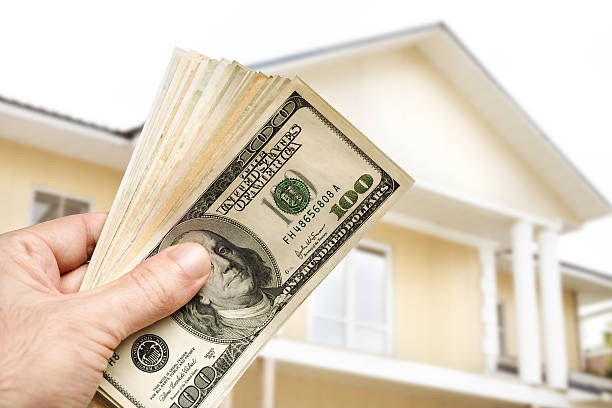
A lot of sellers assume listing with an agent automatically means walking away with more money, and sometimes it does.
But many times, it doesn’t, especially when you factor in the real costs involved.
A traditional sale often includes a 5–6% agent commission, closing costs, repairs after inspection, cleaning and staging expenses, and months of holding costs while your home sits on the market.
All of those expenses come out of your bottom line.
Let’s break that down using a $250,000 home. A 6% commission equals $15,000. Add roughly $5,000 in closing costs, $8,000 in repairs, and four months of holding costs at $2,200 per month ($8,800), and you’re already at more than $36,000 in expenses before you receive your proceeds.
If the home needs major repairs or takes longer to sell, that number climbs even higher.
Suddenly, the “higher sale price” doesn’t feel so high.
Selling directly to Avid Real Estate Solutions removes commissions, repair demands, showings, and months of uncertainty, and in many cases, speed helps protect your equity.
The Interest Rate Factor: Why Buyer Power Matters
Interest rates play a bigger role in your sale than most homeowners realize.
When rates rise, monthly mortgage payments increase, which means buyers qualify for less. As affordability shrinks, demand softens.
Fewer qualified buyers typically leads to lower offers and longer time on market.
Even if your home is beautiful and fully updated, buyers still have to qualify for financing.
If they can’t afford the payment, price reductions often follow.
Waiting for interest rates to drop may sound like a smart move, but no one can predict when, or if, that will happen.
Selling while buyer activity remains strong can often be more financially sound than holding out for perfect conditions.
Real Example: The Cost of Waiting One Year

Let’s look at a realistic scenario.
Your home is worth $250,000 today, and your monthly holding costs total $2,200.
Over one year, you’ll spend $26,400 just to keep the property.
If minor repairs worsen and cost another $5,000, and the market dips by just 3%, a $7,500 drop in value, the numbers start stacking up quickly.
In this example, waiting one year could cost you $38,900. That’s not exaggeration, it’s math.
Even if the market increases slightly, it may not offset what you’re spending to hold onto the home.
Waiting often feels safe and strategic, but financially, it can quietly reduce your overall return.
When Waiting Might Actually Make Sense

To be fair, waiting isn’t always the wrong decision.
If your home is paid off, your monthly expenses are very low, you’ve recently completed major upgrades, or you’re under no financial pressure, holding onto the property may not create immediate strain.
In those situations, you may have more flexibility to watch the market.
However, if you’re making significant monthly payments, the home needs work, it’s sitting vacant, or you need liquidity soon, delaying your sale could be costly.
The longer you hold onto a property that no longer serves your needs, the more you risk losing through ongoing expenses and market fluctuations.
What Cash Buyers See That Most Sellers Don’t

As professional home buyers, we evaluate properties differently.
We look closely at market risk, the time value of money, holding costs, local demand shifts, and projected repair expenses.
These are the factors that determine whether waiting will truly increase your profit, or quietly reduce it.
We’ve seen many homeowners delay their decision, convinced that time would improve their outcome.
In many cases, the opposite happened. They lost equity through ongoing expenses and shifting market conditions.
Speed creates certainty, and certainty protects equity. That’s why many sellers ultimately choose the simplicity of selling directly.
How to Know If Waiting Is Costing You

If you’re unsure whether waiting is hurting you financially, take an honest look at your situation.
Are you paying more than $1,500 per month to hold the property? Does it need repairs? Is it vacant? Do you need access to cash in the near future? Have you already thought about selling multiple times?
These are all signs that time may not be working in your favor.
Getting a cash offer doesn’t mean you have to accept it. It simply gives you real numbers so you can compare your options clearly.
Instead of guessing what the market might do, you can make a decision based on facts, and that clarity alone can save you money.
The Power of Certainty
When you sell to a cash buyer, you remove many of the biggest variables in the traditional process.
There’s no waiting months for the right buyer, no surprise inspection demands, no financing falling through at the last minute, and no commission fees reducing your proceeds.
You also avoid cleaning, staging, and repeated showings. Instead, you receive a clear offer, a flexible closing timeline, and a straightforward process from start to finish.
For many homeowners, that certainty is more valuable than chasing a hypothetical higher price that may or may not materialize later.
Ready to See What Your House Is Worth, Without Waiting?
With Avid Real Estate Solutions, there are no fees, no commissions, and no pressure. Just clarity and a straightforward path forward if you choose to move ahead.


Comments